Monday, October 13, 2014

Becky: We're back!

After a very long silence I've decided to write a post in hopes to keep writing!

I can't believe Cynthia is 8 months old yesterday! She is now daring to stand on her own. 


Another great event is that Andy and I have finalized a wedding date! This September we took our engagement photos at the village. Here's a little sneak peak:

What about you? How is your little one if you have any. Are you recently engaged? How long have you known each other?

Tuesday, October 7, 2014

Kristen: Negotiating the Public/Private Sphere at a Reenactment

"Kristen! Just where is your bonnet young lady?"
"...um..."

And as I continue the journey, my shocked mother/father/aunt scolds me in a most appropriate manner. The Missing Item rests gently on a stand under my tent fly, ribbons swaying in the breeze. For the life of me I cannot remember to wear my bonnet in public. 
But I can see it from here! Does that count?
Photo by Ken Giorlando

As an experienced reenactor, I have found the many intricacies of the 19th century to be fascinating. Clothing, jewelry, language, and etc: all of these are scrutinized before the day of an event. Any modern items are removed from sight! Yet for all of my research, I can't quite seem to perfectly nail down the public etiquette.
Rule #1: Don't feed the reenactors after midnight
Photo by Ken Giorlando

Don't get me wrong, my manners can be impeccable. The most typical of the unladylike behavior is out of the question for me. No, my most difficult decisions come from deciding how to do what in front of whom in the correct place. Negotiating the public/private sphere at a reenactment takes time, experience, and so much communication with other reenactors. I've chosen this topic because recently I have seen other new reenactors struggle with the concept, and I'd like to offer my support. After all, how could we expect someone to go on contributing to the reenacting community if reprimands lurk in the shadow of every gloveless hand or missing under-sleeve? 

The 19th Century Public/Private Sphere
It seems that even ladies and gentlemen of the time also ran into "difficulties" with the etiquette. So many books promised themselves as "guides" through the social sphere. Politely determining the appropriate moment for the appropriate action, these tell us so much about what is considered acceptable in the public eye. The following are examples from The Lady's Book of Etiquette and Manual of Politeness:

On the Street:
A lady's conduct is never so entirely at the mercy of critics, because never so public, as when she is in the street. Her dress, carriage, walk, will all be exposed to notice; every passer-by will look at her, if it is only for one glance; every unlady-like action will be marked; and in no position will a dignified, lady-like deportment be more certain to command respect.

Wear no jewelry in the street excepting your watch and brooch. Jewelry is only suited for full evening dress, when all the other details unite to set it off. If it is real, it is too valuable to risk losing in the street, and if it is not real, no lady should wear it. Mock jewelry is utterly detestable.

Why did you not dress before you came out? It is a mark of ill-breeding to draw your gloves on in the street. Now your bonnet-strings, and now—your collar! Pray arrange your dress before you leave the house! Nothing looks worse than to see a lady fussing over her dress in
 the street. Take a few moments more in your dressing-room, and so arrange your dress that you will not need to think of it again whilst you are out.


Accommodating Visitors:
Two dressing-rooms must be ready; one for the ladies, and the other for the gentlemen. Have both these rooms comfortably heated, and well lighted. Nothing can be more disagreeable than cold, ill lighted rooms to


dress in, particularly if your guests come in half-frozen by the cold of a winter's night, or still worse, damp from a stormy one.


When Staying with a Family:
Inquire, as soon as possible after your arrival, what are the regular habits of the family; the hours for rising, for meals, and for retiring, and then be punctual in your attendance. Many ladies are very ceremonious about waiting for a guest, and by delay in your room, or inattention to the time, when you are out, you will keep the whole family waiting.

Never take any one who calls upon you into any room but the parlor, unless invited to do so by your hostess. You have, of course, the entrĂ©e of other rooms, but you have no right to extend this privilege to others.

If any family secret comes to your knowledge while you are on a visit in that family, remember the hospitality extended to you binds you to the most inviolable secrecy. It is mean, contemptible, rude, and ill-bred to make your entertainers regret their hospitality by betraying any such confidence; for it is as sacred a confidence as if you were bound over to silence in the most solemn manner.

Your dress should be handsome, but not showy. A silk or cashmere wrapper, richly trimmed, over an embroidered skirt, with a pretty cap, or the hair neatly arranged without head-dress, is a becoming and appropriate dress. Still better is a rich but plain silk, made high in the neck, with long sleeves. Wear a handsomely embroidered, or lace collar, and sleeves, and a rather dressy cap, or, still better, the hair alone, prettily arranged.


Never look back! It is excessively ill-bred.

Avoid lounging attitudes, they are indelicate, except in your own private apartment. Nothing but ill health will excuse them before company, and a lady had better keep her room if she is too feeble to sit up in the drawing-room.

The Theatre—Here you must wear your bonnet, though you may throw aside your cloak or shawl, if you desire it. Your escort will pass to your seats first, and then turn and offer his hand to lead you to your own. Once seated, give your attention entirely to the actors whilst the curtain is up—to your companion when it is down.

The Opera—Here you should wear full dress, an opera cloak, and either a head-dress, or dressy bonnet of some thin material. Your gloves must be of kid, white, or some very light tint to suit your dress. Many dress for the opera as they would for the theatre; but the beauty of the house is much enhanced by each lady contributing her full dress toilette to the general effect.
Lectures—Two ladies may attend a lecture, unaccompanied by a gentleman, without attracting attention.
The dress, bonnet, and cloak, worn in the street, should be worn in a lecture-room, as these are, by no means, occasions for full dress.
FOUR IMPORTANT RULES:
"Order is heaven's first law."
1. A suitable place for everything, and everything in its place.
2. A proper time for everything, and everything done in its time.
3. A distinct name for everything, and everything called by its name.
4. A certain use for everything, and everything put to its use.

What is Public/Private at an Event?
This is a question that every group needs to explore while considering the geography of a reenacting location. How does the space define the activities of the reenactors? A few scenarios include weekend-long events, day-tripping, and site specific reenactment. Let me offer my personal examples:

Scenario 1: Every year that I camp at Greenfield Village, I pack everything but the kitchen sink (I head over to the Assenmacher tent if I want one of those!). Set-up starts Friday afternoon, with teardown Monday night. Any modern items are carefully hidden in period appropriate containers or inside a tent. Greenfield Village enforces a strict authenticity standard, so everything in the public eye must be correct.
...and wistful
Photo by Ken Giorlando

Scenario 2: At the Wolcott Mill event in past years, my "home" was a little more difficult to define as a day-tripper. I had many friends that offered the privacy of their tent for any of my modern needs. The outdoor reenactment required little to no setup. I had to be more careful to put away my car keys/phone in an appropriate place, as I did not want to disfigure a friend's site.
Photo by Ken Giorlando

Scenario 3: The day-long Fort Wayne event is a treasure; we reproduce a Christmas in the Commandant's house, complete with tree and meal. I've already blogged about it here. We are encouraged to only bring authentic items, with anything modern carefully stowed in appropriate receptacles. The entirety of the night is spent in first person! Lapses into the 21st century are not acceptable.
19th century nomming 
Photo by Ken Giorlando

These are just three very different events that I attend every year, with a wide range of requirements. I find that my wardrobe and supplies change significantly between events. I like Elizabeth Clark's assessment of the Progressive Questions, stating that: "You can see that each situation requires thought, research, and effort to put the research into practice. One solution will not fit all!" (Clark, The Progressive Questions). Ain't that the truth?

Questions to Ask
Many reenactors ask/answer these questions without a second thought. But for our newer members, such information may not even be on the radar. It's a hectic time before that first event, with shoes, corsets, and tent poles a'flying. Even I occasionally find myself overwhelmed by the bliss of packing my car like a tetris game. Consider the following questions when preparing for any event.

When does the event start/end?
Surprisingly, I have attended a few events that I could not accurately say the start/end time. Most events that allow camping let reenactors set up impressions on Friday night. If this interferes with a personal event, can you day trip? In the past year I've day tripped numerous times in order to survive my graduate studies. I could not attend otherwise! I have heard whispers of reenactors reprimanding those who day trip...how horrible! Life happens, and a lack of respect for personal matters will certainly result in fewer members in the long run. If you are in a group that outright refuses day tripping, decide in that moment if you are ready for that type of commitment.
Oh no! Is that a day tripper?
Photo by Ken Giorlando

I have also found it difficult to tell time during events, as I do not own a watch (yet). Knowing the schedule of an event can mean the difference between an accurate setup and a smattering of leftover fast food on the "kitchen" table under your fly, open to the public eye. I prefer setting up everything accurately Friday night, so that I might lounge most lazily in my toilette Saturday morning.

What is my impression at this event?
At first this is most difficult to determine. In the rush to simply portray accurately, most will forget to build an impression. What is your profession? Who is your family? Where do you live? Elizabeth Stewart Clark has a most excellent article here that illustrates the proper questions for your site. 

I am a bandito sometimes
Photo by Lynn Anderson

This is difficult for new reenactors, as it adds another layer of depth to an event when they are just scratching the surface. You must ask yourself what you enjoying doing, as you will probably do it for awhile. The following are a list of impressions that I have taken over that past four years:

Schoolteacher
Mourning widow
Nellie Auginbaugh 
(Gettysburg citizen)
Adulteress Extraordinaire
Farmer's daughter
Niece/daughter of middle class
Temperance lady
Saloon worker

Please don't feel pressured to find an impression right away. I am a bit of a chameleon, always ready to try a new character. You could say I'm a bit dramatic...but my antics make reenacting a fulfilling hobby. My suggestion is to do something that you like, that you don't mind doing on the weekend. Interested in sewing? Seamstress. Cooking? Cook. Teaching? Teacher. Nearly every interest can be accommodated by reenacting. It is easier to present an honest image to the public if you love what you do!

How are the impressions surrounding me?
Sometimes this question cannot be answered in advance, though knowing the event helps. Communication with the host unit or fellow reenactors is essential. Does the reenactment offer a historic village in which to visit? How are the standards when viewed from the public? What exact battle/aspect of daily life is the host unit trying to capture?
The infamous bumble-bee reenactment
Photo by Ken Giorlando

When you first start out, bringing everything seems important. I recall a few of my first events, with five pairs of gloves, eight cups, and too many dresses to count. Unfortunately the sheer energy to load, unload, wear/use, load, unload, wash those items nearly ruined the hobby for me. I now pack the basics unless a very specific need arises. Some would call that laziness...I call it efficiency. My accurate portrayal to the public does not depend on more furniture, and any modern conveniences are stowed away from the spectator's eye.

Who is my family/friend/neighbor?
An odd question, I'm sure. Currently I am a part of several different family units, blending in as an older, obstinate daughter/niece. My real life family does not participate, so I just jump right in!
Who are those funny people in those funny clothes?

Taking such a role means that I can carefully break a few rules, ones that do not step so far outside of the basic 19th century boundaries. Forgetting my bonnet is the perfect example. Modern Kristen hates wearing hats, and 1860 Kristen shows some disgust as well. She'll wear her bonnet most of the time, with a few forgetful moments. Also, since I've taken that younger role, my "family" is allowed to scold me! It actually makes for a real life 19th century scene, one that did occur (Just ask Mr. Giorlando about reprimanding his daughters!). Remember that mistakes teach as much as proper behavior if framed correctly.
See? A learning mistake
Photo by Ken Giorlando

The fact is that my temporary family has different obligations to me than other reenactors at the event, which requires at least a basic conversation beforehand. Mrs. Paladino has helped me to complete numerous dressing tasks, though it would be considered unladylike for me to ask a neighbor. I have also fussed with her hair, patted down my dear Auntie Lizzie's dress. Creating a backstory with your family is a great part of determining your boundaries at an event.

What is acceptable to do under your tent fly?
This is the space that confuses me the most. For me, it functions as a kitchen, sitting room, dining room, and occasional dressing room. Some days the heat of the day is too intense, and my little A-frame turns into an oven. I don't want to stick around doing my hair or buttoning my bodice as it only takes about 10 minutes in that heat for me to get sick (thanks previous heat exhaustion). Dragging my 9 layers to the bathroom is not necessarily an option either (often they're too small/dirty/portable). For my safety the world may catch a hint of my chemise.
Or the whole thing really
Photo by Ken Giorlando

With that said, it would be unheard of to show such scenes to the outside world. I've received (deserved) scoldings, but I can't help but wonder at the possibilities. Could a person show part of the process to an interested public? How many times have I been asked to lift my skirt to a curious spectator? (It sounds awful that way, but I love teaching visual learners!)
There I am, at it again!
Photo by Ken Giorlando

Many other activities fall under this category. Can I adjust a petticoat in my parlor? Where/when can a woman breastfeed? If my feet are sore can I take off my shoes? Negotiating this space requires communication with the entire group and gentle reminders to new reenactors. Keep in mind, if a person feels physically uncomfortable, reenacting can become less fun and more chore. Will people continue to attend a specific event if the rules are too harsh? Or could you find a way to make those moments teachable to the public?
A 19th guide for not dying of heat stroke...
Photo by Beth Beley Cutcher

I'm not saying break every rule. There are many period appropriate ways to cool down in the heat or stay warm in the winter. Wandering child? Tack a "Not an Orphan" sign on his back. Part of the problem is the complete obsession with a specific authenticity, one that does not necessarily apply to every situation at an event. True, women would not show their ankles in public. But in a hot day in her home, would she not put her feet in a foot bath? Isn't that a great way for spectators to interact with us?
Period appropriate stress relief?
Photo by Ken Giorlando

The same with gloves. At many events the bathroom is not inside/next to the tent. Technically I am leaving my home to use the restroom, exposing myself to the public eye. Do I need to wear my gloves and bonnet to the bathroom? (After losing a glove, my answer is no). Tricky, tricky etiquette. Such questions should be addressed by your group or your own research/personal comfort.

In Conclusion...
Perhaps the most important point to remember: be kind to others. The question of public vs. private stumps even the most seasoned reenactors, let alone the newbies. I have seen plenty of experts from the reenacting community argue about minute details, using various sources to prove their claims. In short, an awesome dialogue between awesome people.
They used documentation? Goodness!
Photo by Ken Giorlando

However, I have seen many a reenactor aggressively enforce a "rule" without research to support it. Or even if they do have sources...intrusive tactics often backfire. The snickers and offhand remarks don't help either. I've seen them online too! If you have been personally insulted by someone, please realize that we are not all petty. I want you to learn and grow into a safe environment of historical reproduction.
However, we are all pretty
Photo by Ken Giorlando

One story I've heard is of a dear friend, attending her first event. She made her dress, oh how she was proud! Unfortunately, a group of wagging tongues assaulted her, tearing her hard work to shreds without any thought to her feelings. My friend will admit now that her dress was not perfect, but the humiliating experience nearly made her leave reenacting completely. How can we expect new members to stay if such behavior exists?

And to those patient, honest, hardworking mentors; kudos to you! The art of education is a daunting task, a delicate dance between teacher and student. I've seen those people, with their gifts of gently used authentic items, their sharing of resources. What is the best way to tell a person that he/she needs to improve? Or that the baffling amount of money spent on a sutler row dress means little now? What is good enough, and what is truly authentic enough? Such questions should be communicated by members of a group, avoiding any hurt feelings.
And some will inevitably turn to the bottle
Photo by Ken Giorlando

I hope this post inspires my readers to address these questions with newer members. Comparing the public vs. private spheres at an event tells much more about the 19th century than we can possibly know. A polite, educated conversation could do far more to enhance the reputation of the reenacting community. If all else fails, just be nice!
~Kristen

Tuesday, September 30, 2014

Kristen: 19th Century Motif, Arrows

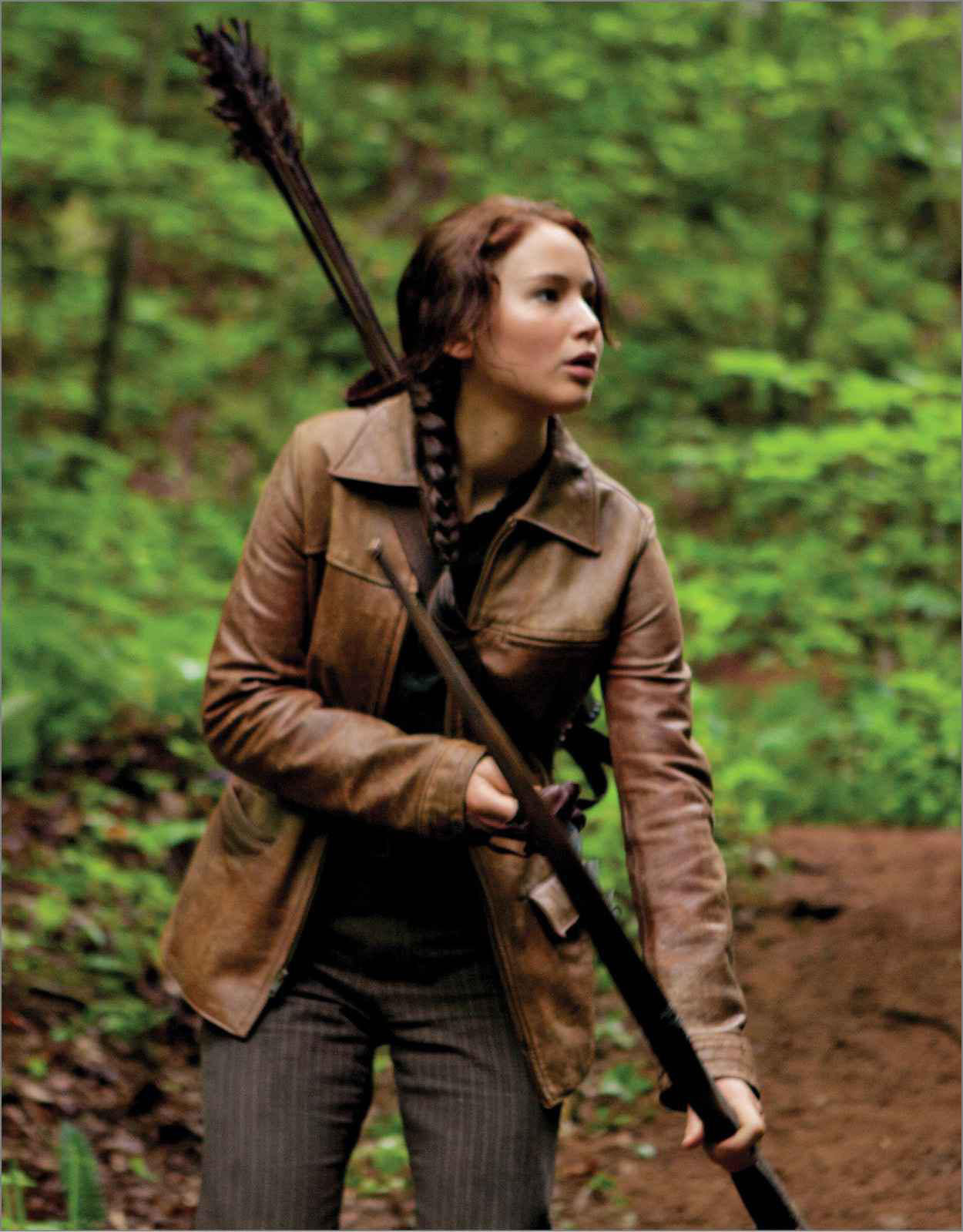
I pinky swear promise that this post wasn't inspired by The Hunger Games movie. Totally mean it. Definitely was not looking at Katniss when I thought about writing this.
Ah, The Hunger Games

All joking aside, the arrow functioned as a motif in women's clothing/jewelry throughout the 19th century. It's amazing how once I start to look for a common thread, I find it woven throughout! Before I delve into documentation of its use, I first need to research its importance to the ladies who would have daintily shoved it into their hair.
Symbolism
The first and most obvious examples relate to Cupid's arrow. Here I found a poem in Godey's Lady's Book from April 1857, entitled "Cupid's Arrows" by J. Howard Smite, excerpt:

Shooting wanton with his arrow ,

Drawn from quiver deep and narrow,
Cupid stands,

In his plaid and bright-hued kirtle,

On a tiny new-born myrtle
Which expands.

Barbed arrows , sympathetic,

With a polar power magnetic,
Weave those bands;

Arrows were poisoned, erect, thrust into the breast of an unsuspecting mother/father/lover. An arrow to the heart could deliver a passionate love or a world-ending insult. Seriously, Godey's has so many mentions of just the word "arrow," that I found examples in every year from the mid 1850's through the Civil War.
Godey's 1865

Yet the Roman Revival brought another layer of symbolism to the love-entwined arrow: Diana. As the Roman goddess of the hunt (Greek: Artemis), she is depicted with her quiver, arrows, and crescent moon. (I'll be doing a post about crescent moons later!) She is strong, quick, and clever. I can understand the 19th century woman looking to her as inspiration!
 19th century

Visual Documentation
In order to fully understand the scope of the arrow functioning as a motif, I must examine the period before the Victorian Era. Two Nerdy History Girls has already written about the topic of arrows in the hair, from 1805-1830. I shall include a bit of their research as an introduction to the 1850-1870 time period. These paintings show an affection for the style, one that is also seen during the Civil War.
 1831
 1832

I completely understand an early 19th century opinion towards the arrow. It is simple yet complex in its meaning; the ladies also enjoyed a Roman revival in the sheer empire-waist dresses of the time. Such a style gently complements an elegant figure, especially if dabbed generously with sponges to achieve that extra-sheer look (no, seriously).

My next step was to find photographic documentation of the arrow during the 1850-65 time period. Alas, I had no such luck! I hunted (haha) through hundreds of tintypes, carte de visites, daguerreotypes, and just about everything in between. Were the arrows too small to see? Placed in the back of the hair or side of a bonnet? I was able to scare up a few photographs, though most are a bit later than I'd like:

From my past experiences with research, I've discovered that sometimes certain elements of documentation take longer to acquire. If I did not have many other examples, I would not have written this post. Sometimes the most compelling forms of evidence pop up later during other searches. Patience, O researching one!

Written Documentation
Luckily I have other forms of evidence that lead me to believe that the arrow existed. The magazines of the mid 19th century contain so many examples of the arrow, specifically in the context of jewelry. I've included a few years before the war too, as it shows the continuity of the symbol.

Godey's Lady's Book, June, 1857
The dress, however, that perhaps attracted the greatest attention was that of the beautiful Cemtesse Castaglione, consisting of a gown of red satin, covered with bouillonnes of red crape below, and a lace tunic above. The coiffure was composed of two red feathers, fastened in the middle at the point of the forehead, and turning backwards round the ears. This lady wore at the fancy ball of Mdme. Walewska a costume yet more remarkable. The robe and corsage were of cloth of silver, the latter perfectly tight and considerably decollete, with extremely short sleeves, and no ornament or trimming whatever, but a large diamond heart; the former displaying an under skirt looped up at one side, so as to display the ankle, round which a bracelet was clasped. On the head five diamond hearts were held together by an arrow transpiercing them, and a flowing veil completed the costume.

Godey's Lady's Book, June, 1858
La Coiffure Diane
THIS ornament for the hair is at once new and tasteful. It is composed of large beads, etc. Among the wedding presents of the Princess Royal there was a very elegant headdress of pearls and rubies. It is to be found already at Bailey's, and will be much in favor for the watering-place season, from its novelty and simplicity. It is kept in place by an arrow , of gold or silver. A necklace of the same style accompanies it. Necklaces are once more in decided favor, and answer admirably with the low, or Vandyke corsage.

Godey's Lady's Book, January 1860
And this was why— because of the jockey-club scented notes, and the flattery, and the protestations, and the sort of shy, silent bliss of reveries and dreams— because of the lock of oiled hair I kept in my writing-desk, and the ring, deviced by two hearts transfixed by one arrow , I wore on the “engagement-finger” of my left hand— because of that very natural feeling, common to all hearts, which makes us all want somebody to love and to love us, till sometimes the glamor so blinds our eyes that we mistake the dross for the fine gold— because of all this, for one twelvemonth of my life I walked in a blissful dream along a path of roses.

Godey's Lady's Book, September 1860
Now, there was Belinda Bell; I saw her last week, looking at and admiring and going into fits over a pair of sleeve-buttons, gold, set with tortoises, that Abram Smith was a-wearing; and last night, to Tuttle's party, she had them very sleeve-buttons on, and an arrow stuck in her hair that I'm certain I saw in Mr. Moss' cravat not long ago.

Peterson's 1861

Arthur's Home Magazine 1863

Godey's Lady's Book, March 1865
Fancy pins and arrows of all descriptions are worn in the hair, and some very pretty ones, formed of crochet work and jet, have appeared for mourning.

Godey's Lady's Book, August 1865
Mme. Tilman, of 147 East Ninth Street, New York, has some very beautiful varieties of nets suitable both for full and demie toilette. Some are of very fine silk, studded with immensely large beads of pearl, gilt, jet, pink and red coral, malachite, bright and dull steel. The latter resembles lead, but is a pretty novelty. Others are of gold-colored silk covered with tiny pendent arrows or crescents. A very graceful style is of twisted gold and braid, every cross-bar being ornamented with a small bead.
Very attractive also are the brilliant ornaments of rock crystal set with colored jewels. Among them are daggers, swords; and arrows of gold, with rock crystal, pearl, or richly jewelled hilts or ends, intended as ornaments for the hair

Godey's Lady's Book, October 1865
Fig. 4: Bonnet of black tulle, dotted over with steel beads. A bow of tulle is caught at the back with a steel arrow and fancy ornaments. The inside trimming is formed, of scarlet velvet and white field daisies.

Godey's Lady's Book, December 1865
The latest introductions are tiny brilliant stars, bright enamelled bugs, daggers, arrows , dogs, and horses' heads of gilt, lizards, shields, delicate chains and coins, also fringes of crystal, steel, and gold. They are of very artistic workmanship, and when gracefully worked in with silk velvet and lace form the most irresistible and stylish of hat trimmings. A very attractive style of velvet hat is a long turban, formed of puffs of velvet running lengthwise and of alternate colors, such as black and scarlet, or black with blue or green, five puffs forming the hat. Much taste and skill are displayed in the arrangement of the various elements used as decorations, and among the most stylish we notice a full dahlia-like rosette formed of box-pleated scarlet velvet, traversed through the centre by a large dirk, arrow, or sword.

Obviously the arrow gained more popularity by the end of the war, as evidenced by its mention in more of the later issues. However, it is found in nearly every year before and during the Civil War. What variety as well! Gold, silver, jeweled, plain! And I shall certainly add more to this section later; I am currently perusing the German and French magazines. Did you know that the word is flèche in French, arrow in German? Of course I picked Spanish as my foreign language...

Artifact Documentation
Yet my research would not be complete without actual examples of arrow jewelry. This part was more difficult, as it is hard to exactly date each piece. As I noted previously, the arrow could be constructed with gold or silver, plain or adorned. A pin could be passed down from a family member and proudly worn. 
1860-1880
19th Century
1880's
1870's
Mid to Late 19th Century
1820's

Based on the materials mentioned from my documentation, a wide range of arrow types could fit into the 1860-65 time period. Also, I noticed other symbols attached to the arrows. The crescent moon is especially important, as these symbols both relate to the goddess Diana. It appears that the more research I accomplish, the more questions arise!

Final Thoughts
In case you were wondering, the arrow is still a popular symbol. Look no further than The Hunger Games franchise, in which an entire generation of American children now wish to participate in archery! We still see the prodding arrows of Cupid in February, the feathery delight of a new Robin Hood tale. Fashion has not forgotten the arrow either:

There was a point to this crazy arrow obsession. I've wanted to assemble "La Coiffure Diane" for some time, though I've lacked patience for the research. Well, it is finished! I have added it to my Etsy shop, complete with necklace and earring set. The arrow looks fetching in the hair, and I'm going to make myself a set when I regain that patience! Click here for the listing.

Before everyone in the reenacting community decides to purchase an arrow, I would like to ask a few questions to ensure that the arrow is correct for the impression at hand. After all, a fancy bejeweled arrow will look fantastic with a ball gown or silk dress, but terrifyingly wrong with a cotton work dress. There are the types of questions to ask before adding anything to an impression:

Would the person I'm portraying own such a piece?
When/where/how will I wear an arrow?
Does it make sense to wear it then/there/in that manner?
How does this relate to the rest of my clothing?
Will I be able to explain the symbol to curious spectators/reenactors?

Personally, I would like to see a wider variety of motifs represented in the reenacting community. Such diversity will not only look appropriate, but create a broader inspection of the 19th century as a whole. After all, a little learning never hurt anybody!

~Kristen

On My Bookshelf: December

December has been a really rough month. Between what happened in Oxford (not far from where I live...) and just the general pandemic issues,...