Wednesday, January 27, 2016

19th Century Material: Bog Oak

For this post I thought I'd bring to light some of the darker stone jewelry that grew prevalent during the 19th century. I've been looking at the lovelies online for some time, so it's time to show off some of my research. Bog oak is my favorite, so I'll start there!

For my pre-history lesson, I'll remind the reader that in 1861, Queen Victoria lost her husband Albert. She launched herself into a perpetual state of mourning. Fashion followed her icon! An explosion of dark stone jewelry overtook the collarbones and wrists of the Victorian lady. Bog oak, gutta percha, jet, vulcanite...all could fit appropriately for some form of mourning. And since America mimicked European/English fashion, we tagged along!

From 1861 and onward, black became quite fashionable. Clothing and jewelry seemed to reflect this change the most. The mourning would continue until Queen Victoria's death in 1901. Her beloved Albert's death in 1861 would shape the evolution of style for a century to come.


History
According to Google, bog oak is defined as "an ancient oak tree that has been preserved in a black state of peat." This can be pine, oak, or yew. Bog wood can be found throughout the world, but in terms of 19th century jewelry, it really came from Ireland. This explains the Irish motifs of abbeys, castles, shamrocks, and religious motifs often found in the jewelry.

The industry for bog oak ornaments began in the early 19th century. Patrick M'Guirk, a goldsmith and jeweler, presented a carved walking stick to George IV of England. His design was greatly admired, and others soon began working with bog oak. By the Great Exhibition of 1851, the craft became a well-known craft of Ireland. It's popularity really exploded after Queen Victoria's husband died in 1861, making all of the dark stone jewelry a must-have thing.

Bog oak was also used as a building material. One can find furniture dating back hundreds of years utilizing the material. It looked nice and was fairly easy to work with.

Historical speaking, there is quite a bit of evidence proving the existence and use of bog oak during the 19th century. In terms of jewelry? Well...

Photographic Evidence
One of the usual problems I run into concerning photographic evidence...just what in the heck am I looking at? Is it bog oak? Gutta percha? A splotch of ink dropped by a careless relative? Time can be cruel to such items, and photography was still a new craft. Here's a few that might be it...

It's so hard to tell! I searched for jewelry that had more of a dull texture, but that requirement could apply to vulcanite. At the very least, we can see that it is worn by women of different ages and in different contexts. Brooches, bracelets, and earrings could all be made from bog oak. While the evidence is a bit grainy, it is enough to establish that such jewelry existed on women during that time.

Textual Documentation
FOURTH ANNUAL REPORT OF THE ROCHESTER LADIES' ANTI-SLAVERY SOCIETY.
FREDERICK DOUGLASS' PAPER. January 19, 1855.
Among the contributions from Cork, greatly admired, was the choice and rare assortment of bracelets. Those manufactured of fish-bone, and bog-wood , always sell; indeed, the fijouterie from Cork is generally well disposed of.


National Anti-Slavery Standard. January 27, 1855
The Bristol Box included very beautiful articles from Frenchay, Chatham, Ilsminster and Southampton, and a variety of pretty things, patch work, toys, &c., contributed by the children of St. James's Back Ragged School, the Kingswood Reformatory School, Levins’ Mead Boys’ Sunday School, Levins’ Mead Girls’ Daily School, and the Blind Asylum. The pretty baskets from the latter were disposed of at once. Dublin furnished a most elegant and abundant assortment, rich in Afghan blankets, embroidered table covers, papier-maché, bronzes, purses, elegant cushions, the prettiest of smoking caps, ornaments in bog oak, crochet collars, an arbutus wood backgammon board that was greatly liked, and such an immense variety of little articles as we cannot enumerate.

THE TWENTY-FIRST NATIONAL ANTI-SLAVERY BAZAAR.THE LIBERATOR. January 26, 1855
Dublin furnished a most elegant and abundant assortment, rich in Afghan blankets, embroidered table covers, paper mache, bronzes, purses, elegant cushions, the prettiest of smoking caps, ornaments in bog oak , crochet collars, an arbutus wood backgammon board that was greatly liked, and such an immense variety of little articles as we cannot enumerate.

Frank Leslie's Weekly. March 17, 1860

IRISH Bog-Oak Bracelets, Brooches, Ear-Drops, Pins, &c.
SWISS Carved Fancy Boxes, &c., from London Exhibition.
AMERICAN Indian Beads and Barkwork, Feather Fans, &c.
GERMAN Fancy Articles for the Holiday sales.

Frank Leslie's Weekly, APRIL 5, 1862

Frank Leslie's Weekly, DECEMBER 12, 1863
THE Irish “Bog Oak ” has been long known and celebrated. It consists of the fallen trunks of ancient oak forests, now deeply covered by accumulations of peat bog, but still perfectly sound. This ancient wood furnishes large quantities of valuable timber, which is mined from the beds in which it lies, and worked into beautiful articles of cabinet work, sculptured panels and other carving. The dark stain imparted to it by the long steeping it has undergone in water saturated with both vegetable and mineral matters, gives it a special value for ornamental wood work. Similar deposits of ancient wood exists in the vast swamps of New Jersey. These buried trees, however, are cedars and not oaks, and it is made a regular and profitable business to dig them from their beds, to be manufactured into shingles, which are said to be of exraordinary excellence and durability. A New York paper thus describes the timber and the process of getting it out: “These swamps are very valuable, an acre of such timber commanding from $500 to a $1,000. A peculiar feature of the swamps is that the soil is of purely vegetable growth, often 20 feet or more in depth. The peaty earth is constantly accumulating from the fall of leaves and boughs, and trees are found buried in it at all depths, quite down to solid ground. The timber so buried retains its buoyancy and color, and large numbers of workmen are constantly employed in raising and splitting the logs into rails and shingles. In searching for these logs, the workmen uses an iron rod, which he thrusts into the soil, and by repeated trials, ascertains the size and length of the wood he strikes, and then, by digging down, obtains a chip, by the smell of which he can determine whether it is worth removal. The number of shingles produced from the wood of these submerged forests is very great; from the little town of Dennisville, in this county, as many as 800,000, valued at $12,000 have been sent to market in a year. From the same place, thousands of dollars worth of white cedar rails are annually sent out. The deposit of timber at this point extends to an indefinite depth, and although, from the growth above it, believed to be 2,000 years old, is all entirely sound, and will supply, for years to come, the draft upon it.”

That last reference describes bog oak as "celebrated." Interestingly enough, fashion magazines such as Godey's Lady's Book or Arthur's Home Magazine do NOT mention bog oak in terms of jewelry. Of course magazine heroines survive the treacherous "bog," or use it for their plants. But it seems my only references are found in terms of sale. What does this mean for bog oak jewelry? We know it was bought/sold in terms of jewelry, as noted by "Bog-Oak Bracelets, Brooches, Ear-Drops, Pins." I find this lack of evidence in fashion magazines to be quite intriguing!

Surviving Originals


It is incredibly difficult to date this jewelry, as many of these styles continued through the 19th century. I couldn't find many examples of bog oak jewelry, or perhaps as many as I assumed. Is it because the wood deteriorates at a different rate than other materials? Or was it not considered as important to save as some of the other jewelry? Does it truly matter because it's all gorgeous stuff?

Conclusion
While I collected enough evidence to prove that bog oak certainly adorned the 19th century lady, I was surprised by the amount. Why isn't there more? Why don't fashion magazines publish articles about bog oak? Or was it considered more of a novelty? I love when I leave a post with more questions than answers. It makes me think more deeply about my research, and where it could go!


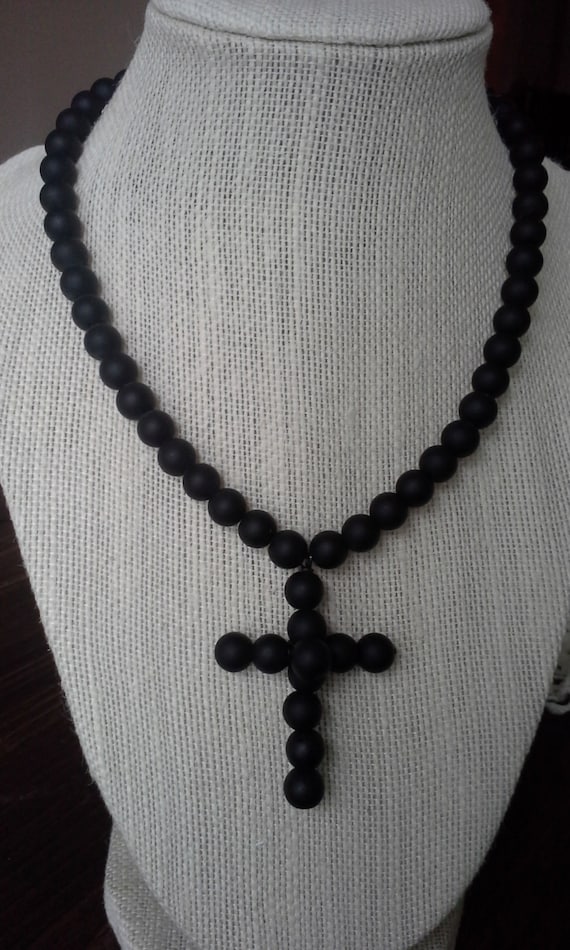
I do have a few pieces in my shop that emulate that bog oak feel. My reproductions of bog oak are typically made with clay, as it can have a similar matte appearance. I'm also particularly proud of the cross; made with a matte onyx bead, I have found plenty of documentation for that particular style of jewelry. Since bog oak is precious, I lock away my originals rather than wear them. I'm a jewelry accident waiting to happen...
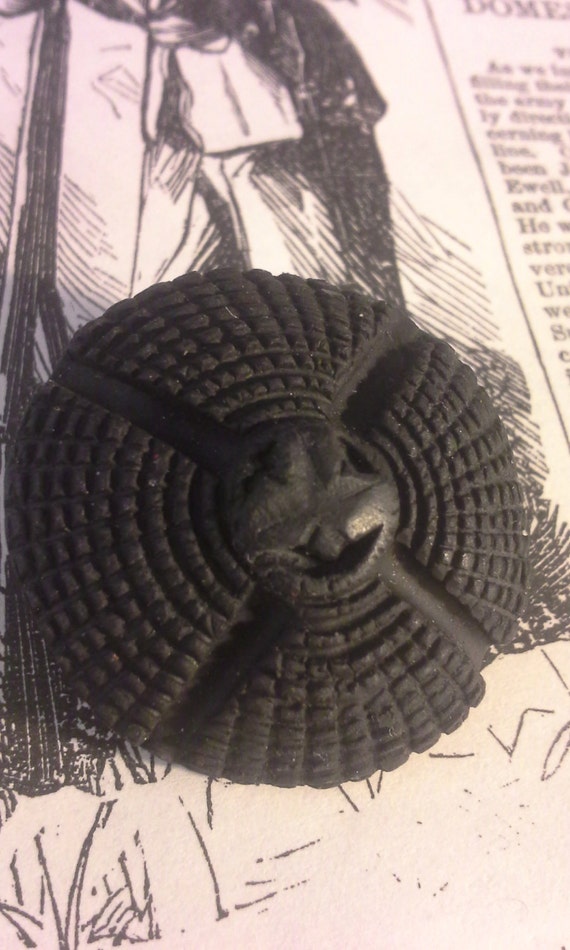
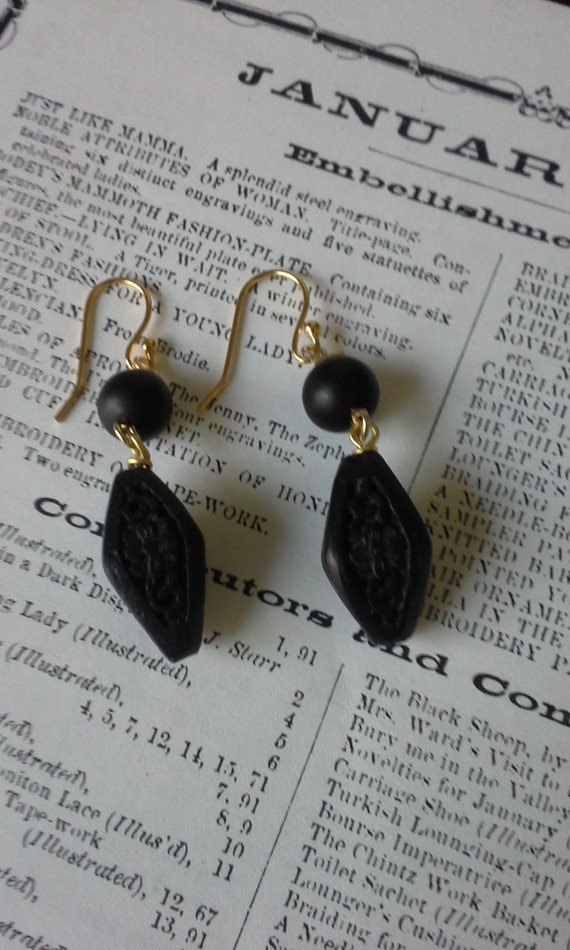
You can expect to see posts coming in the future about jet, vulcanite, gutta percha, and etc. The dark colored jewelry really seeped into 19th century material culture. In terms of bog oak, I hope this post works as a research platform: a place to start. By no means is this exhaustive! Perhaps you have a piece that you would like to incorporate into a mourning impression. Or a "visit" to Ireland left you with a few fine trinkets. No matter the purpose, a little more research never hurt anyone!

While writing about bog oak, the heaping pile of research has inspired me for my next "dwelling in the primary sources" article. It will be a bit of a mystery, one that we can hopefully solve together!

~Kristen

Sources

Friday, January 22, 2016

Friday Funny 1/22


A throwback to the early 19th century, with a lovely gentlewoman warming before the fire. A book in her hand, a meal on the table, this lady knows how to enjoy life. Oh the ways to describe the scene!

-A Pair of Breakfast Baked Buns
-The Dowager's Sizzling Derrière
-A Roasting Regency Rump 
-Half Dress Delicate Hindquarters
-Promenading the Pinked Posterior
-A Farthing for the Fiery Fanny
-Waiting for the Chaise while Scorching Cheeks
-The Beau Monde Burnt Buttocks
-Spicing One's Seat in the Sitting Room
-The Ton's Toasty Tush

I hope you're all staying warm and enjoying the "tail end" of your January!

~Kristen

Wednesday, January 20, 2016

Florida 2015/Chickamauga 2016

Another trip out of state...this time to Florida! This trip capped off an amazing year of travel. While Florida would not be my top pick for vacation (ahem California), it was amazing to feel the heat and sit near the ocean. My fiance and his uncle took out the catamaran for a rough day on the seas, and we floated through the channels on New Year's Eve, watching the glittering lights of Fort Lauderdale.
Also at some point, I ate oysters! I really love oysters...

We also stopped by the Bonnet House, an historical house and acreage in the heart of downtown Fort Lauderdale. Built in 1920 by artist Frederic Clay Bartlett, the estate pays homage to the family art collections. Our tour took us through the lush grounds and into the eccentric house. There were about 10,000,000,000,000 mosquitos, but it was worth the trip.

We left on January 1st, starting the new year off with the 20 hour drive home to Michigan. While I didn't drive at all (he's a champ), it was exhausting just be in the car for that long. We decided to stop in Georgia, and I found a little bed and breakfast overlooking the Chickamauga battlefield. Battleview Bed and Breakfast had a comfortable bed, lovely shower, and the best breakfast. Ever.

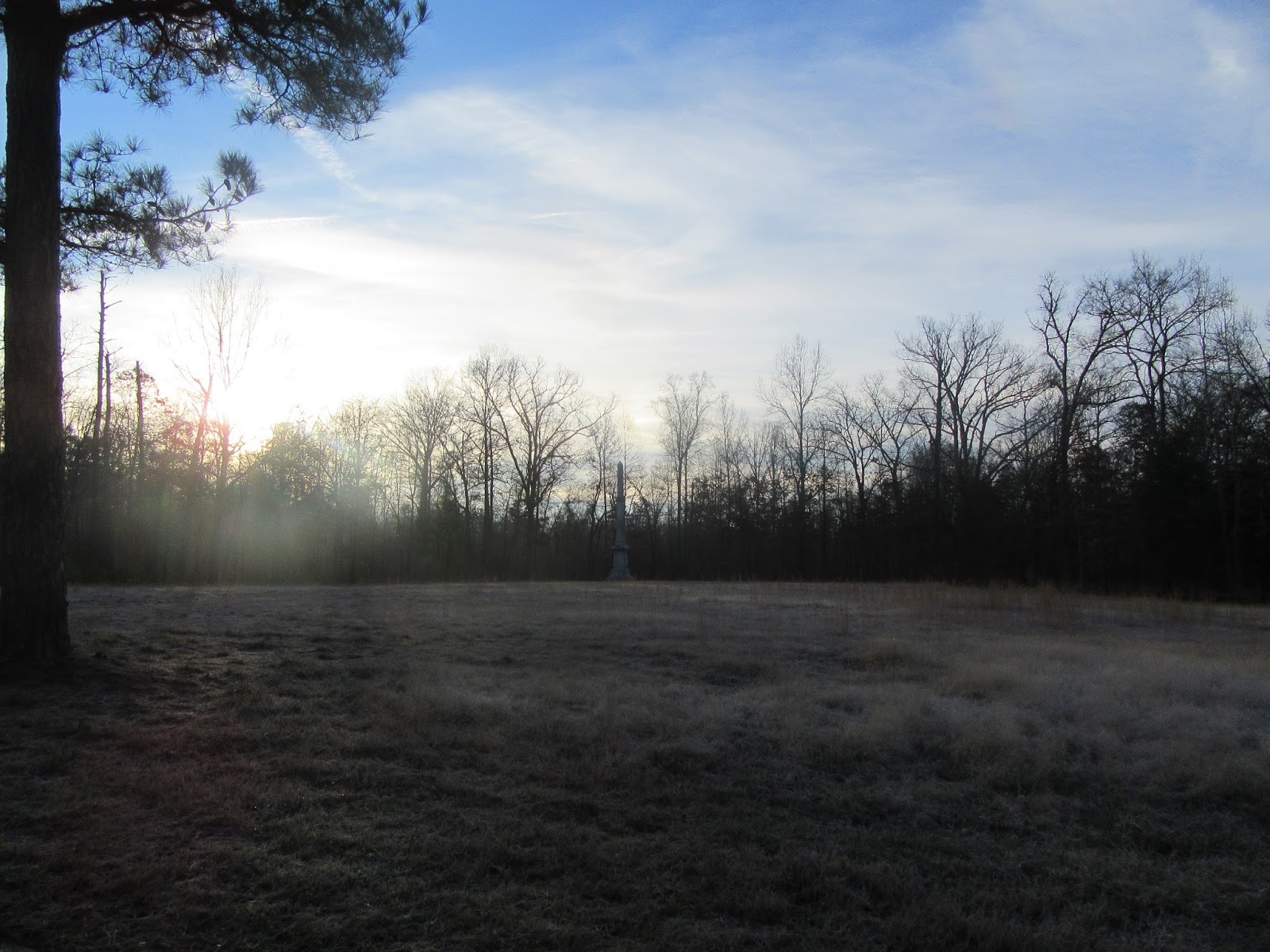
We didn't have a lot of time to visit the battlefield, but unlike Gettysburg, one can explore it mostly from the car. The monuments looked peaceful in the crisp morning light, so different from the blood that was once spilled there. We stopped by the 21st Michigan monument for a short time. I felt proud to see the stone commemorating my fellow Michiganders. While we didn't get to stay very long, the experience at Chickamauga made me want to visit more historic sites in 2016!

The drive back took 10 hours, and I almost kissed the snowy concrete. As much as I love traveling, I had spent nearly two weeks away from my pets and home. There are quite a few events on my calendar for February and March, including the Ohio Regimental Ball and a craft show with my Dad.

Let's see...one battlefield stop at the beginning of 2016. I wonder what the new year will bring!

~Kristen

Friday, January 15, 2016

Friday Funny 1/16

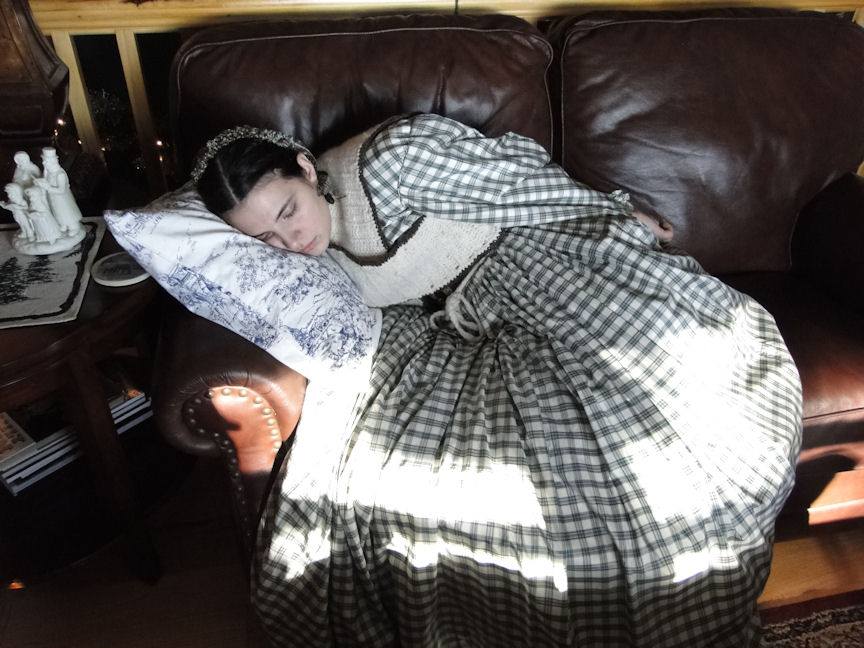
Drawing sneaked by...wait, is that even possible?
Photo sneaked by Ken Giorlando

Ugh, this week. I CAN'T EVEN.
I'm happy to see my 19th century counterpart catching some serious Zzzzz. We are kindred spirits, dopplegangers across time. Her puffed pile of pillows softly accentuates her delicate features, while I snore away on a plush leather couch. My only question is, what is the purpose of that big round thing just behind the curtain? What does she store there? Fish? Flowers? Dreams? Mine is filled with the tears of students, collected over a long career of English novels and term papers. You know what they say: No rest for the wicked. 

~Kristen

Dwelling in Primary Sources: The Orphan

I accidentally stumbled upon the topic for this post. I started by jumping onto Google Books. If you've never used Google Books, you should start! I have a tutorial that you can use to help navigate online. I'll include that brief tutorial here, for your leisure: 


Topic: 19th Century Orphans

Primary Source:
The Lady's Home Magazine of Literature, Art, Fashion, July 1858, the story Marion.

Process:
I started by skimming through the text, looking at the illustrations and the titles of articles. I settled on Marion, by Virginia De Forrest, because it had an accompanying picture. As I read the story, I found myself picking up on the theme of orphaned children throughout the text. I spent more time pouring through the different stories, finding that the orphan was quite a common character in the 19th century narrative.

Collaboration: Mary Breeding

Analysis
Marion grew to be quite intelligent, and had a "loving disposition," despite her lack of parents and future prospects. As a governess, a certifiable damsel in distress, Marion received the "offensive" attentions of George Morton. The story itself ended with the main character marrying Harry Ashly, one of the wealthy men who rescued her from destitution. A tidy plot, ending with a "rich parure of diamonds" around the handsome young lady's neck.

In six months of issues, I found the word "orphan" 14 times from July-December. Another story, entitled "We Two," The main character, Correl, is a rich orphan, with a poor orphan helping the cook in the house. She "possessed that charm which is above every charm of grace and beauty; which, the older you grow, and the wiser and better you are, will outlast all others..." It was a series piece that followed them through trials and tribulations, ultimately ending in their marriage. Another sad orphan finds true love, wealth, and a happy ending. My curiosity was piqued.

What really caught my attention about this typical "rescue" story was the use of irony in Marion's opening lines, right at the beginning of the story, when the two men happen upon the poor orphan:

Well Harry, you are the hero of this novel! It was as if the author peeked through that fourth wall in writing, which is a technique most used in drama. I found this section to be quite personal, almost beckoning the reader to be a "hero of a novel." And what is the best way to do that? Why, adopt an orphan! It almost felt like an advertisement to adopt...

I brought up this idea at my weekly sewing group. Mary Breeding, a fellow reenactor and history lover, immediately brought up the Orphan Train. I had never heard of such a thing, so of course I spent the next week researching. And then a bunch of puzzle pieces clicked in to place.

The Orphan Train
Tecumseh Chieftain, July 8, 1893
The Orphan Train Movement was a supervised welfare program that transported orphaned and homeless children from crowded Eastern cities of the United States to foster homes located largely in rural areas of the Midwest. The orphan trains operated between 1853 and 1929, relocating about 200,000 orphaned, abandoned, or homeless children.

They would call this process "placing out." Charles Loring Brace, a Methodist minister, decided to address the issue of child poverty in New York. An estimated 34,000 children roamed around the city, earning the name "street rats," as they begged or stole. Brace founded the Children's Aid Society of New York to help alleviate the overcrowded orphanages of the city.
Vincennes Gazette 1860
In 1854 the first train left for Dowagiac Michigan, with 46 children. The placing agents would be in charge of monitoring the children, determining whether or not the placements worked out. Connecticut, New Jersey, and Pennsylvania received children as well. Pennsylvania. Philadelphia is in Pennsylvania. And The Lady's Home Magazine was based in Philadelphia.

A further search revealed that editor T.S. Arthur and Virginia Townsend wrote nearly the entire magazine, with a few contributors. A History of American Magazines notes that "it was for the family sitting room that this periodical was designed. The stories were highly moral, of course, illustrating the evils of flirtation, the folly of personal vanity, the dangers of ill-temper, and the crime of intemperance." The charity of taking in an orphan would have been a highly moral endeavor. I've included a brief note in the Indiana newspaper, Vincennes Gazette, from April 1860, which illustrates the common nature of such an event.

I further discussed this Mary Breeding, who made the whole connection to the orphan train in the first place. "They did it to make it sound like they were doing something good. Even the idea behind the orphan train was that they were trying to raise the child out of poverty. I think that the stories [in magazines] were positive to give validity to the whole movement." Breeding knew someone who was a part of the orphan trains, a coworker in 1972. He was dropped off in Dearborn Michigan on a farm. He never knew his family, and never could track them down. With poorly kept records, it was difficult to find families later as they grew up. 

So I believe I have found the connection with the articles in The Lady's Home Magazine. Virginia Townsend would have been well aware of the orphan problem in 1858. By writing such stories, they normalized the practice of taking in orphans and raising them as family. In both stories, the little orphans turned out to be intelligent, handsome, and hardworking. And by pairing them off with the wealthy sons, Townsend sends the message that such children, especially girls, can be raised to be contributing members of the household. What a perfect wife, if she grew up knowing the family and understanding their traditions/norms! In a way, I would call these stories advertisements for the child welfare movement, which changed quickly with the invention of the orphan train program. 

Questions
I didn't learn about the orphan train until just recently. I would love to see this somehow incorporated into events in the Midwest and other places. How would this look? While some children fared well with this system, others felt like prodded cattle at each stop. Potential guardians would check teeth or muscle strength if they wanted a child to work on a farm. While incredibly demeaning, it is a useful part of history that seems to be left out of many events. The plight of the orphans should not be forgotten. 

How could we incorporate this part of history into Civil War events? 
What other messages are implied in these lady's magazines?

~Kristen

Sources
The Lady's Home Magazine of Literature, Art, and Fashion, Volume 12 1858


Vincennes Gazette April 1860

https://www.youtube.com/watch?v=w1U-vcuw38I

Friday, January 8, 2016

Friday Funny 1/8

So on top of my usual research (which will be up and running next week), I'm going to be doing a thing on Fridays. I shall call it, The Friday Funny. I will find an image from a period source. I will not analyze, study, or try to explain it. I will just appreciate it from a modern perspective with mind to historical context. Sometimes I see something and I'm like-what the heck? Because sometimes, I just wonder about things in the past...

La Mode illustrée: journal de la famille 1861

Join us Billy. Join us.
Are we eating supper?

Guys?...

I have so many questions. Are they eating the mysterious floating lady, or regurgitating her? They are well-dressed children and obviously out to play. Why are they not supervised? Wouldn't this be a wise activity to supervise? Also, the balloon. That sad little balloon is about to float away, just like little Billy's dreams of having a nutritious meal with friends. The French word "rébus" means puzzle, and I fully understand that sentiment. I am puzzled as to why 19th century children in France are manifesting feet in their mouths. 

~Kristen

On My Bookshelf: December

December has been a really rough month. Between what happened in Oxford (not far from where I live...) and just the general pandemic issues,...